Stablecoins and Trump Tariffs: The Future of Brazil-US Transactions

You have likely heard about the Trump tariffs applied to Brazilian products and how the landscape for international transactions has become tense. But how can we understand the role of stablecoins as unlikely protagonists in this new economic chapter? That is what we will explore in this article.
What are Stablecoins?
Stablecoins are cryptocurrencies created to allow users to take advantage of the agility and transparency of the blockchain without suffering as much from major price fluctuations. While currencies like memecoins can see their percentages swing in a matter of hours, stablecoins are pegged to stable assets, usually the US dollar (USD), ensuring predictability for those who wish to send or receive funds.
Main stablecoins
The most traded stablecoins globally are USDT (Tether) and USDC (USD Coin), which together represent about 90% of the stablecoin market.
USDT dominates with a market capitalization exceeding $187 billion, offering high liquidity on platforms like WEEX and being widely used for international transfers and protection against volatility.
USDC stands out for its operational transparency and regular audits conducted by Circle, gaining institutional preference.
Other relevant options include DAI, which operates in a decentralized manner through smart contracts on MakerDAO, and FDUSD, a growing stablecoin with a focus on the Asian market.
Each asset has distinct characteristics regarding backing, governance, and use cases, but all maintain a parity close to $1.00, acting as a bridge between the traditional financial system and the crypto ecosystem.
Utility of stablecoins
The list of uses keeps growing, but the main ones can be listed below. Can you apply any of them to your financial routine?
- International transfers: remittances made between Brazil and the US become faster, cheaper, and more predictable.
- Currency protection: those who fear the fluctuation of the real find in stablecoins a practical way to dollarize funds.
- Cutting-edge financial services: fintechs and companies leverage open infrastructure to create innovative solutions, from B2B exchange to credit offerings for small businesses.
Impact of Trump's international policy and tariffs
Donald Trump has always defended protectionism as his primary international policy weapon. His previous administration had already imposed tariffs on steel and aluminum, in addition to challenging historical alliances due to his “America First” stance. In 2026, Trump continues to raise the tone, provoking political and legal tensions by conditioning trade agreements on internal debates within Brazilian politics.
The immediate result of the tariffs is the increased cost of Brazilian products in the American market, the risk of a retraction of billions in exports, and direct effects on the production chain and the national GDP.
Furthermore, there are clear incentives for the diversion of traditional trade routes, with companies and individuals seeking fast, digital alternatives that are less susceptible to tariff barriers.
Stablecoins in Brazil in 2026
Brazil has become one of the world's largest markets for stablecoins: about 90% of the crypto flow in the country is in these currencies. This reveals a collective movement in search of currency protection and practicality, especially in times of volatility and uncertain regulations.
Additionally, investors are seeking alternatives to the traditional financial system, and stablecoins present a plausible path for 2026 and beyond.
How to buy stablecoins
Buying stablecoins in Brazil is a simple process and increasingly popular among investors seeking currency protection and easy access to the international market.
The first step is to choose an exchange like WEEX, which offers dollar-backed stablecoins such as USDT and USDC, and allows for the direct purchase of these currencies with instant deposits via PIX. After completing your registration and identity verification (KYC), you can deposit directly in Reais on the platform and access the available pairs.
Stablecoins function as a store of value pegged to the dollar, protecting your assets from the volatility characteristic of cryptocurrencies like Bitcoin and Ethereum. Many investors also use these assets as a strategy for quick entry and exit from the crypto market, mainly in direct P2P transfers, avoiding constant conversions to Reais.
If you need to send or receive funds from abroad with agility, check out how to use stablecoins in Brazil-US transfers and enjoy the advantages of this technology.
How to use stablecoins in Brazil-US transfers
- Create a digital wallet or account on a reliable exchange: prioritize national or international exchanges with high reputations like WEEX.
- Buy stablecoins: purchase using Reais, via Pix or bank transfer.
- Sending stablecoins: to transfer to a destination in the US, simply enter the recipient's digital address and confirm the transaction.
- Liquidation: the recipient can sell the stablecoins for dollars or use them in applications connected to the blockchain.
- Legal protection and digital security: a good alternative for large amounts is storage in cold wallets. Avoiding the exposure of private keys and always using two-factor authentication is essential.
Conclusion
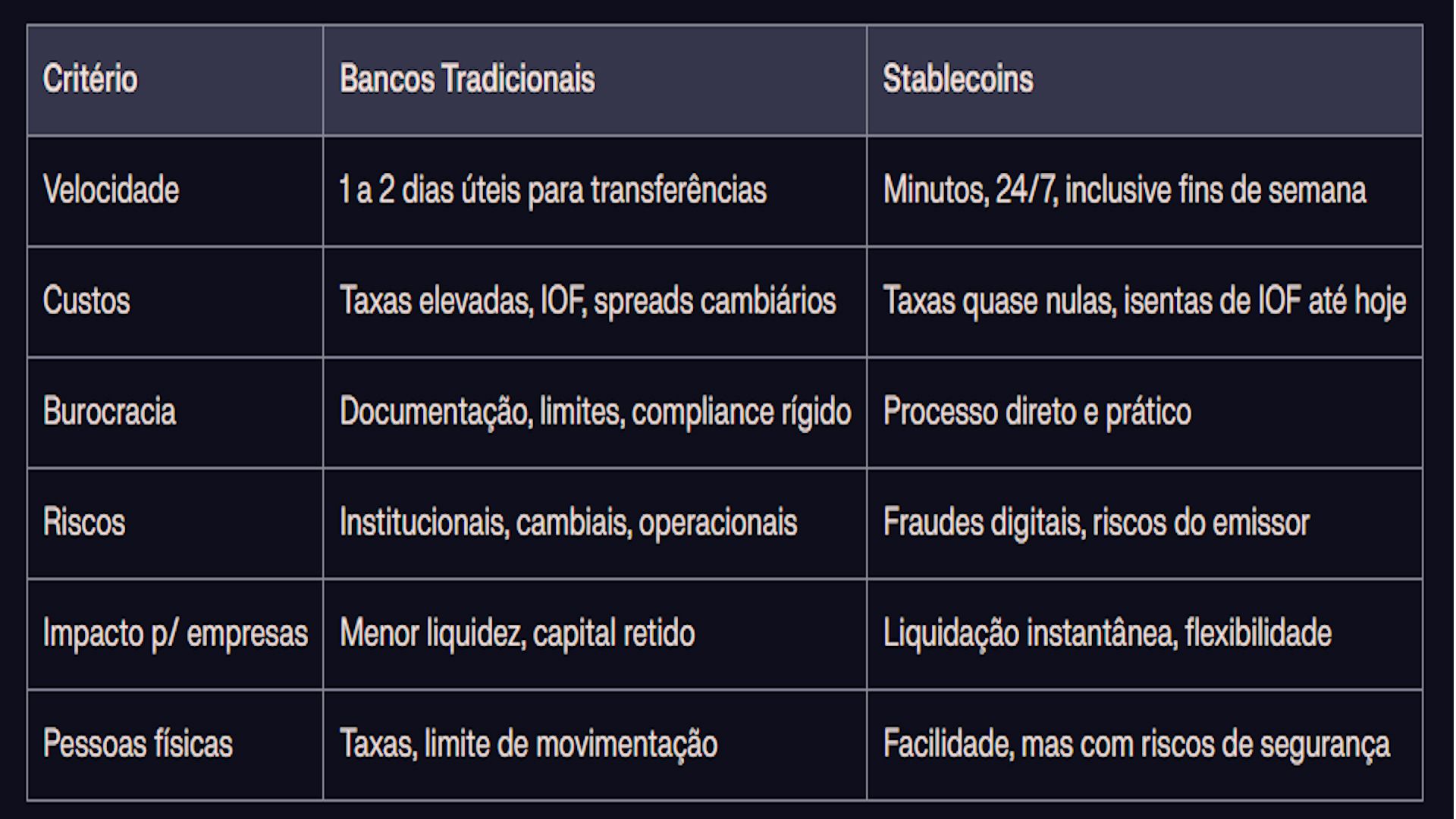
2026 marks a turning point in trade relations between Brazil and the US. The Trump tariffs are not just an economic measure; they are a clear sign that the rules of international trade have changed, and companies that depend on fast and cheap transfers need to adapt now. In this scenario, stablecoins emerge as a real alternative: without excessive intermediaries, without traditional banking bureaucracy, and with settlement in minutes.
However, operating with stablecoins requires preparation. In addition to closely following the evolution of tax regulations, it is essential to maintain strict compliance with the rules of the Federal Revenue Service and choose reliable platforms to move crypto assets. Only then is it possible to take advantage of the opportunities of this new financial geopolitics without exposing your assets to unnecessary risks.
For those who want to take this step safely, WEEX offers direct access to USDT and USDC with a solid structure designed for the Brazilian investor. Open your account and be prepared for the new global financial landscape.
Frequently Asked Questions
What are stablecoins?
Stablecoins are cryptocurrencies pegged to a stable asset, usually the dollar, minimizing volatility and facilitating international transfers.
How do Trump's tariffs affect trade between Brazil and the US?
The tariffs increase the cost of Brazilian exports, threatening jobs and the economy; companies are seeking alternatives like stablecoins to bypass costs.
Can stablecoins be used to avoid tariffs?
They can, in part, speed up and lower the cost of transactions; however, using stablecoins to evade taxes can constitute a crime if there is no proper registration and compliance.
How to use stablecoins safely?
Prefer regulated exchanges, use strong authentication, and have tax guidance to avoid unpleasant surprises.
Disclaimer
WEEX and its affiliates provide digital asset exchange services, including derivatives and margin trading, only where legal and to qualified users. All content is general information and not financial advice—seek independent advice before trading. Cryptocurrency trading is high-risk and can result in total loss. By using WEEX services, you accept all related risks and terms. Never invest more than you can afford to lose. Consult our Terms of Use and Risk Warning for details.